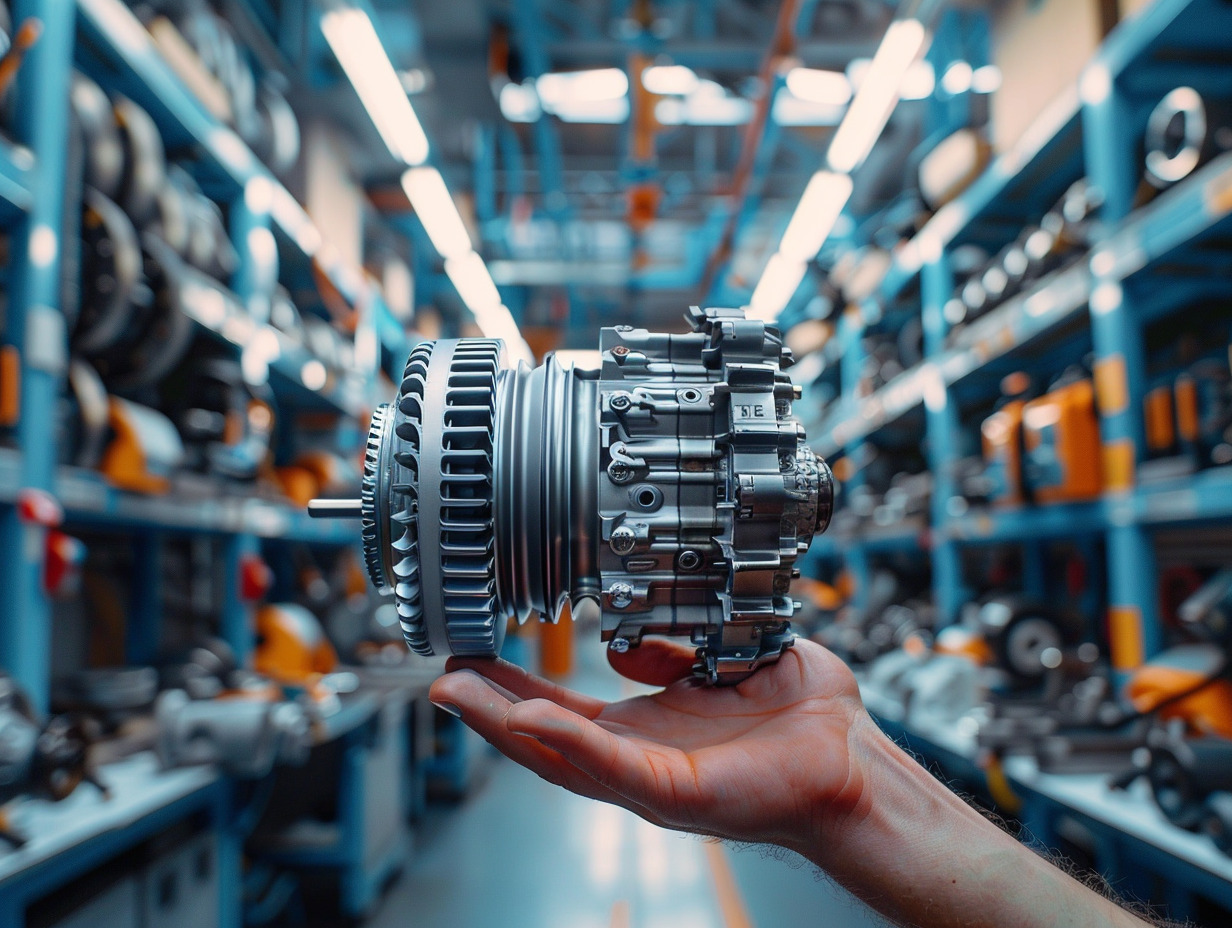
At the heart of a vehicle’s performance and efficiency, the transmission plays a fundamental role in managing the power delivered from the engine to the wheels. Understanding its operation requires a meticulous exploration of its key components, such as the clutch, torque converter, gearbox, drive shafts, and differential. Each of these elements works together to adjust the rotational speed of the wheels relative to that of the engine, ensuring that power is transmitted optimally according to the driver’s needs and driving conditions.
The Fundamental Elements of an Automotive Transmission
In the mechanical labyrinth of the modern car, the automatic transmission embodies a fusion of mechanical, hydraulic, and electrical technology, often regarded as a form of art by enthusiasts. Comprising a cleverly orchestrated hydraulic system, a torque converter, and computer management, this gearbox represents a centerpiece in the symbiosis between the engine and the wheels. The dog gearbox, less known to the general public, stands out for its ability to lock gears directly without resorting to a synchromesh, providing an instant response, crucial in motorsport but less suited for the smoothness of daily driving.
The planetary gear trains, at the core of the transmission, are designed to keep the gears engaged while allowing for different gear ratios. These complex assemblies are the backbone of the powertrain and play a significant role in the global transmission parts market. The multi-plate clutch, for its part, is frequently used to lock the sun gear and the planet gear together, thus ensuring the transition between different gears.
The freewheel, a less visible but no less essential element, allows certain components of the transmission to rotate freely in one direction, optimizing the overall performance of the vehicle. The belts, often overlooked but critical, are used to stop the drum from turning, thus preventing damage that could occur in the event of mechanical failure. The torque converter, replacing the clutch in manual transmission vehicles, allows the engine to continue running even when the car is stationary, a key feature for ease of driving in traffic jams, for example.
The Operation and Maintenance of Transmission Systems
At the heart of the operation of transmission systems, the hydraulic system plays a triple role: it circulates transmission fluid under pressure, ensuring control of gear shifting, lubricating moving parts, and cooling the entire system. Without this element, the subtleties of the automatic transmission could not be implemented. The hydraulic pump, for its part, is the engine of this delicate system, providing the necessary pressure for the proper functioning of the transmission, a pressure that must be constant and adjusted to the dynamic needs of the vehicle.
The valve body, the true control center of the automatic transmission, precisely manages the flow of oil through the hydraulic system. This fine mechanism is complemented by computer management, which monitors and adjusts gear shifts based on data received from the centrifugal governor, the vacuum modulator, and the throttle cable, which record and transmit information about the optimal timing for gear changes. This electronic orchestration is fundamental for smooth driving and flawless responsiveness.
Preventive maintenance remains the key to the longevity and reliability of the transmission. The seals and gaskets, although discreet, are of paramount importance in preventing transmission fluid leaks, thus avoiding potentially costly damage. Regular vigilance and prompt intervention in case of signs of weakness prevent complications and ensure consistent performance and efficiency. Take care of these technical details to guarantee the longevity of your transmission system, this precision mechanism that powers the heart of your vehicle.