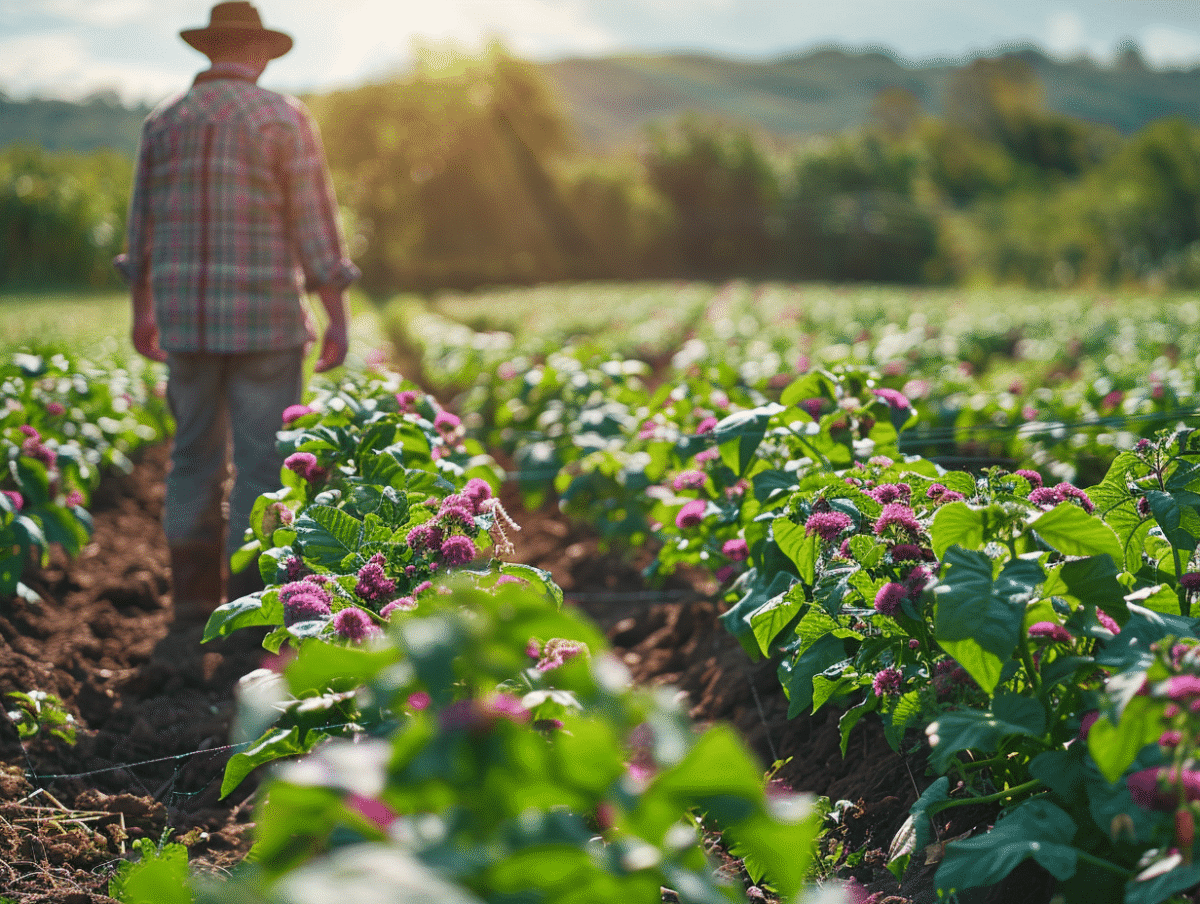
The cultivation of sweet potatoes, valued for their nutrient richness and culinary versatility, represents an economic challenge for farmers and a health asset for consumers. Maximizing yield involves mastering agricultural techniques, from variety selection to harvest. The challenges are numerous: adaptation to climatic conditions, irrigation management, and pest and disease control. Optimal methods can positively impact productivity. Expert agronomy advice is therefore essential to achieve a plentiful and quality harvest while preserving resources and the environment.
Improving Cultivation Practices for Optimal Sweet Potato Yield
Planting density, soil quality, irrigation, and mulching techniques are key factors influencing sweet potato cultivation. An appropriate density allows plants enough space to develop their tubers, thus optimizing the sweet potato yield per plant. The soil, for its part, must be rich and well-drained to promote growth. Controlled irrigation prevents excess water, which can be detrimental to plant health, while mulching retains moisture and maintains stable soil temperature, both essential conditions for growing this tuber.
Temperature variations and fungal disease prevention present additional challenges. Selecting varieties such as ‘Bonita’, ‘Georgia Jet’, ‘Covington’, and ‘Orléans’, known for their productivity, proves to be crucial. Crop rotation can also enhance biodiversity and strengthen plant resistance to diseases and pests. Therefore, consider the benefits of integrating sweet potatoes into an intercropping system, combining, for example, legumes that enrich the soil with nitrogen, a vital nutrient for tuber development.
In the face of challenges such as drought and nutrient management, crop rotation becomes essential. This agronomic principle prevents soil depletion and limits the spread of diseases specific to sweet potato cultivation. Gardeners looking to maximize the productivity of their vegetable garden would do well to plan a rotation with unrelated crops, thus ensuring plant health and sustained yield year after year.
Post-Harvest Storage and Valorization of Sweet Potatoes
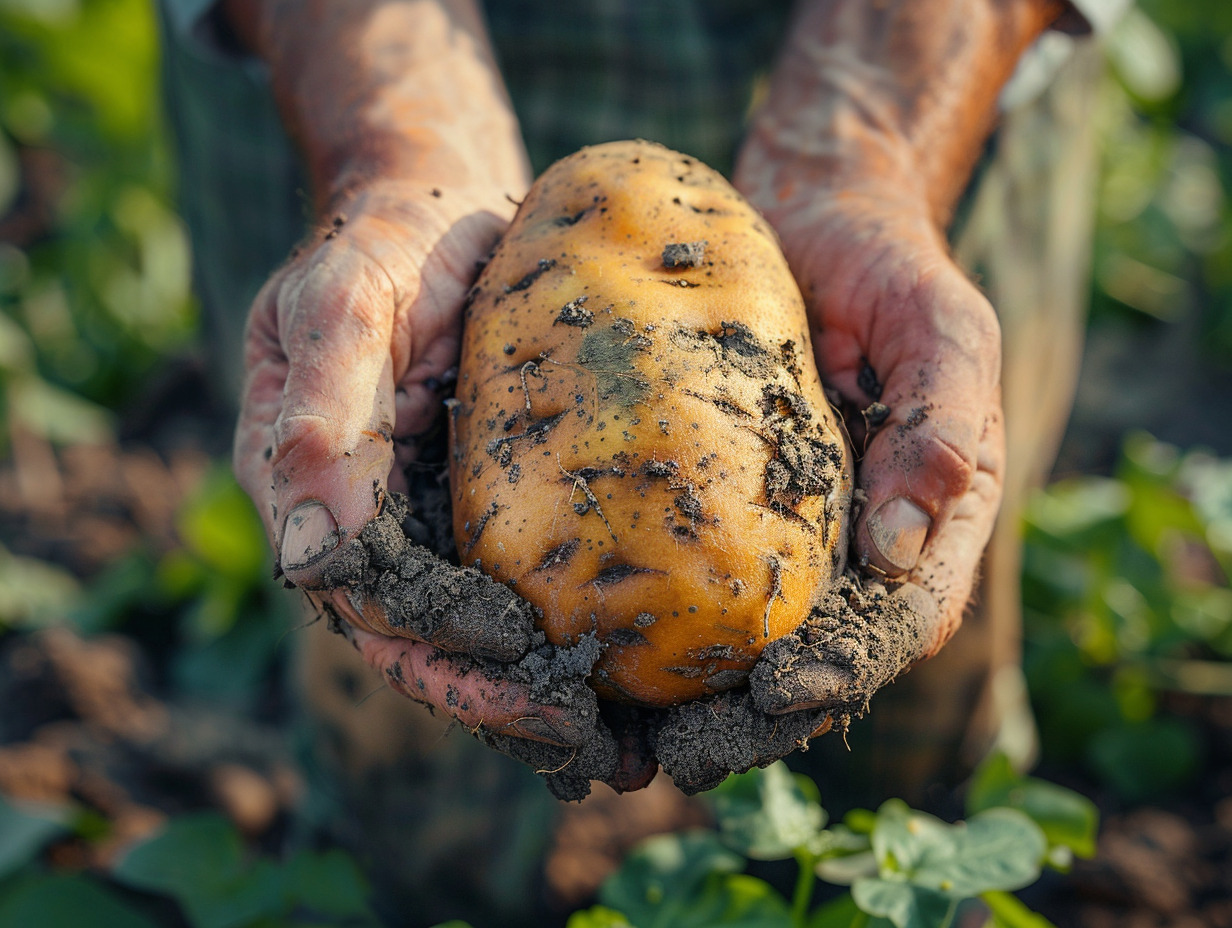
The success of sweet potato cultivation is measured not only at harvest time but also by its ability to withstand time. Storage and post-harvest valorization are major steps to prolong the freshness of the produced tubers and maximize profits. Special attention must be paid to the harvesting method itself: avoid any injury to the tubers that could accelerate degradation and invite diseases.
Once harvested, sweet potatoes require a curing process to heal any bruises and strengthen the skin. This process involves keeping the tubers at a high temperature and humidity for a specified period before storage. Follow this essential step to extend the shelf life of your sweet potatoes and preserve their quality.
For long-term storage, conditions must be carefully controlled. Temperatures should remain stable, ideally around 13-15°C, with relative humidity between 85-90%. These conditions help prevent dehydration and inhibit premature sprouting. Remember to regularly inspect the stock to remove damaged tubers that could affect others.
The valorization of surplus harvest can take various forms, from processing into derivative products – such as purees, flours, or sweet potato chips – to direct sales at local markets. These initiatives not only optimize income but also contribute to promoting healthy and local eating. Extending the freshness of the tubers while transforming them into innovative products opens new horizons for sweet potato growers.