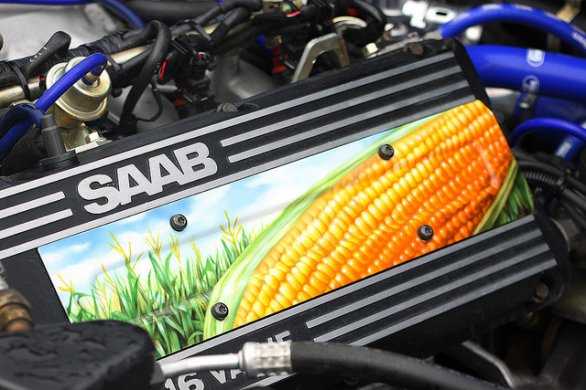
ethanol cars What about them? They are “savers” and affordable, even Fiat knows something about this, but let’s get to the point.
Ethanol cars, cars with E85 and E10 blends In many countries around the world, there are blends of 85% ethanol and 15% gasoline (E85) and low ethanol blends (10% ethanol, precisely E10) that can be used in almost all modern vehicles.
Bioethanol as fuel in cars has many advantages but also some drawbacks: bioethanol lacks lubricating power, for this reason, E10 and E85 blends can be useful in all cars that have an electronic control unit. Exclusive bioethanol (100% ethanol fuel) can only be used in specially designed engines such as Flex Fuel or Tetra Fuel cars.
The addition of ethanol to gasoline not only makes the fuel cheaper but also less polluting: during combustion, there is a significant reduction in carbon monoxide, which, even in E10 (a blend containing only 10% ethanol and 90% gasoline), sees a reduction of about 25% in CO, thanks to the higher oxygen content that allows for a more complete combustion. With the addition of bioethanol , there is also a decrease in heavy metals. What does not decrease are volatile organic compounds (VOCs), substances that easily evaporate at room temperature; in this context, there are additives that, when added to the blend, lower volatility values to levels below those of gasoline. With the addition of bioethanol to the fuel, there is no change in nitrogen oxide-based pollutants.
The environmental benefits associated with using bioethanol as fuel for cars, especially at high percentages (E85 blend), are considerable.
Ethanol carsbioethanol, Fiat Not everyone knows that some car manufacturers, including FIAT, make factory cars ready to run on pure ethanol or in a blend. These are the aforementioned Tetra Fuel or Flex gasoline cars. In this regard, please refer to the article Auto Fiat Bioethanol.
Bioethanol carsethanol is absolutely inferior to that of gasoline. Already in the mid-1970s, the Brazilian government launched a development program for car power called “ProAlcohol,” in this context, the production of bioethanol from sugarcane was encouraged. This campaign was driven by the impending oil crisis. By 1984, in Brazil, out of every hundred cars sold, 94 were alcohol-powered. At the end of the oil crisis, in the following years, the trend initiated in Brazil gradually declined, but with the increases in gasoline prices in recent years, ethanol cars have come back into the spotlight: in 2010, there were up to 3 million ethanol vehicles in circulation in Brazil.
Tag : install an ethanol kit